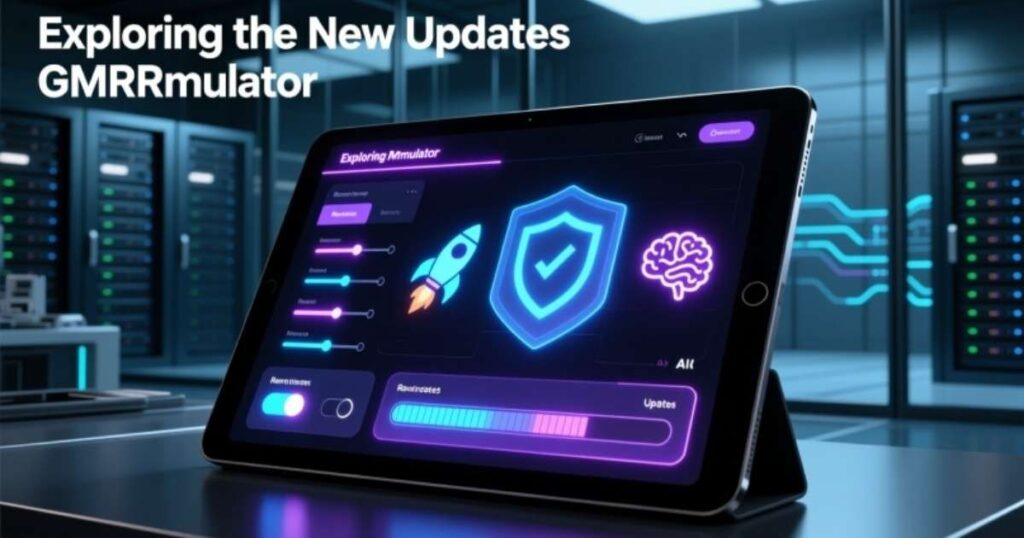

Some folks get annoyed if their simulator acts up or slows down after an update. Maybe you’re checking for new versions of GMRRmulator hoping it’ll run faster, work more smoothly, maybe stop crashing mid-task. A tiny glitch might throw off your entire process without warning. What seemed fine yesterday suddenly isn’t.
One thing after another, the latest changes to GMRRmulator start making sense when spelled out plainly. Not only do they shift how things work, but there is a reason each tweak shows up now. Changes appear across functions that users touch every day. Instead of confusion, clarity comes from seeing fixes where problems once popped up regularly. Little by little, actions feel smoother because behind-the-scenes adjustments add up. It becomes obvious whether investing time pays off – once you see it running fresh. Worth noticing: effort spent learning them matches gains down the road.
What Makes the New Updates GMRRmulator a Game-Changer?
Now things move quicker when opening heavy files. Smoother handling comes through during tight sequences. Response sharpens even under pressure. Frustration slips away piece by piece. Time adds up differently these days. Those building simulations daily feel the shift most. Work flows without old hiccups getting in the way.
Heavy files used to drag things down, but not anymore – performance got a real boost lately. Working through big simulations stays smooth, almost like nothing changed under the hood. Fewer pauses pop up during long sessions, which keeps momentum going naturally. Crashes? Not as common now, thanks to steadier code behind the scenes. Less lost work means less frustration piling up by noon.
Efficiency gains quietly change how people interact with the tool. Because GMRRmulator handles memory and CPU tasks with less waste, things move faster without asking. Heavy workloads glide instead of stuttering under pressure. Day after day, it just works – fewer hiccups, fewer delays. Smoothness builds trust in ways numbers alone never show.
Key Features of the New Updates GMRRmulator
Out of nowhere, an update can be tiny – or massive. GMRRmulator’s latest shift lands firmly on the wilder side. Right away, people see it: things move quicker, clutter fades, control sharpens at that initial tap.
Start strong with changes that go beyond looks. Smoother handling shows up right away, thanks to smarter design behind the scenes. Day-to-day simulations run tighter, even when demands climb. Big models behave just as well as smaller ones under pressure. Less friction means work flows without constant correction. Effort drops while results stay steady, no matter the scale.
Revolutionary Interface Redesign
Out of nowhere, the new look grabs attention right away. With less clutter in menus, getting around becomes smoother – important features pop up just when needed. Skipping past those packed control zones means moving quicker, spending energy where it counts. Imagine clearing off a chaotic table, suddenly everything has its place. Dashboard simpler tools easier to reach feedback clearer customization broader with New Updates GMRRmulator.
| Interface Element | Previous Version | New Updates | Improvement |
| Dashboard Layout | Crowded and complex | Clean and organized | Faster navigation |
| Tool Access | Hidden in multiple menus | Quick access panels | Saves working time |
| Visual Feedback | Limited indicators | Real-time alerts | Better task tracking |
| Customization | Basic layout options | Flexible workspace setup | Improved user comfort |
Advanced Configuration Options
The update GMRRmulator give users more control over how the software behaves. Settings are now easier to adjust for different project needs. You can fine-tune simulation speed, system resources, and output preferences without deep technical steps. This flexibility helps beginners and advanced users work more comfortably and efficiently.
Enhanced Resource Management
Now tweaking how the program runs feels smoother thanks to the new GMRRmulator upgrade. With changes clearer and closer at hand, matching settings to a project takes less effort. Adjusting simulation pace, available computing power, or where results show up doesn’t demand expert knowledge anymore. Comfort grows for everyone – those just starting out along with those who’ve been using it longer – all find their rhythm faster here thanks to New Updates GMRRmulator.
| Resource Area | Previous Handling | New Handling |
| CPU Usage | High during all tasks | Smart load balancing |
| Memory Usage | Frequent overload | Controlled allocation |
| Background Processes | Constant resource drain | Reduced idle consumption |
| File Storage | Slower temporary saves | Faster optimized caching |
Enhanced Resource Management
Sluggish systems under heavy loads? Not so much anymore thanks to smarter handling in this version. Memory, processing power, and disk space get used with better judgment now. Background noise gets trimmed without fanfare, leaving room for steady operation. Runs feel cleaner, interruptions fade, irritation dips when pushing through tough simulation work.
|
Resource Area |
Previous Handling |
New Handling |
|
CPU Usage |
High during all tasks |
Smart load balancing |
|
Memory Usage |
Frequent overload |
Controlled allocation |
|
Background Processes |
Constant resource drain |
Reduced idle consumption |
|
File Storage |
Slower temporary saves |
Faster optimized caching |
Expanded Format Support
Now handling various files feels smoother. Importing one format after another skips separate converters entirely. Collaboration speeds up since simulations move freely between platforms. Teams relying on distinct engineering tools find it helpful – especially when working across diverse setups and job settings. The New Updates GMRRmulator ensure everything stays completely aligned.
Improved Speed and Better System Performance
Starts quicker than before, noticeable right away. Projects open faster now because delays dropped off. Response feels snappier since waiting faded into background noise. Stability holds up even when things get messy. Big models run without stuttering like they used to. Performance climbs quietly but surely under pressure. Work flows easier from one task straight into the next. Smoothness sticks around all day long.
Right off, the changes feel natural, like they were always meant to be there. This version of GMRRmulator reshapes how things look while quietly upgrading what runs underneath. Instead of favoring one aspect, it links pace, precision, and stability into something smoother. Suddenly, handling complex simulations becomes less about struggle, more about progress.
See More : How to Register Lcfgamevent Easily Step by Step Guide 2026
Improved Speed and Better System Performance
Stuck watching a spinning wheel while your thoughts race ahead? It happens. A frozen sim kills momentum fast. This time around, the team behind GMRRmulator sharpened their aim at lag – slashing delays, tightening responses. Work flows now, not stutters. Effort drops without fanfare. Less strain just shows up quietly.
What changed isn’t buried under layers of code. New Updates GMRRmulator optimize how files load quicker, simulations start faster, because of it. Less waiting happens now when handling big tasks. Smarter handling of memory and speed makes the difference noticeable. Even those new to the system feel how smooth things run. Power users spot the gains too, without needing to dig into settings.
See More : How to Register Lcfgamevent Easily Step by Step Guide 2026

Speed Improvements That Actually Matter
Now things move quicker thanks to the new GMRRmulator upgrade. Starting simulations feels almost instant, while reports pop out before you lose your train of thought. Files slip through processing like water – no more staring at spinning wheels. With fewer pauses breaking concentration, attention stays locked where it belongs. Projects wrap up sooner, simply because time once lost now adds up in useful ways.
|
Metric / Task |
Previous Time |
Updated Time |
|
Small Model Runs |
12 seconds |
7 seconds. |
|
Medium Simulations |
45 seconds |
28 seconds. |
|
Large Engineering Models |
2.5 minutes |
1.4 minutes. |
|
Export Reporting |
30 seconds |
18 seconds |
Lower Delays in Operations
Imagine how tiny pauses stack when you’re moving fast. Menus pop open before your thought finishes. Views shift without waiting, while adjustments apply themselves mid-gesture. Suddenly, everything flows – like gliding past intersections others get stuck in. Work slips forward easier. Each click weighs less. The day breathes differently with New Updates GMRRmulator.
System Resource Optimization
Now running lighter on processor power, RAM, and disk space. By skipping extra hidden workloads, it spreads out jobs smarter across available resources. Thanks to a leaner simulation core, bigger designs keep moving without clogging up the machine. Machines not built for heavy lifting handle tasks easier today, facing fewer stalls plus steadier responses during operation.
Scaling to Meet Increasing Needs
When projects get bigger, the tools used need to keep up. With the new GMRRmulator update, running large simulations stays smooth even under heavy load. Engineering teams notice this most – models evolve, demands rise, yet speed holds steady. Work scales forward while delaying costly hardware changes or full platform swaps.
Better Stability During Extended Use
Spending hours on precise simulations makes steady performance far more valuable than raw pace. When crashes fade and hiccups vanish, the software holds up through marathon sessions. Progress sticks around without vanishing into thin air. Mistakes shrink when people know their effort won’t disappear mid-flow. Strength builds behind the scenes – a quiet backbone for serious tasks.
Speed matters when tools stay out of your way. Updates in GMRRmulator actually deliver on that promise, not just talk about it. Faster responses come through smarter design, not extra noise. Stability builds trust over time, especially when things run without hiccups. The system works because it adapts, breathes, stays steady.
Learn More : Software GDTJ45 Builder Problems: Fixes, Tips & 2026 Insights
Compatibility and Integration with Other Tools
Most days, a strong simulator works better when it talks to what you’ve got. Without links to current tools, great functions begin seeming small. This time around, GMRRmulator builds wider bridges so tasks flow easier across systems.
Working between various systems just got smoother, thanks to updates that ease the strain on users. Not only do engineering simulations run alongside cloud apps, but older platforms also connect more reliably. Instead of juggling disjointed pieces, everything links in a way that mimics a single workspace. Even when handling outdated setups, tasks flow without constant switching. The result? Less friction, fewer hiccups, and a setup that behaves like it belongs together.
Connect Third Party Tools Smoothly
Now moving data feels easier because GMRRmulator links straight into familiar tools people use daily. Without needing hand-done transfers or changing formats again and again, information flows quicker across systems. Fewer errors pop up since tasks take less time, a quiet win when big jobs demand precision morning after morning. Speed becomes normal instead of rare under pressure.
- Faster data sharing between software
- Less manual file conversion
- Better team collaboration
- Reduced workflow interruptions
Cross-Platform Functionality
Not every team sticks to a single system these days. While some run Windows, others lean toward Linux or web-driven sim tools. Now, GMRRmulator handles those differences better – work flows even when setups differ. Productivity holds steady across distances because glitches at the interface fade away.
- Better support across multiple systems
- Improved remote teamwork
- Easier cloud integration
- Fewer platform-related errors
Legacy System Support
Some firms keep using old setups because swapping them out fast isn’t realistic. Thanks to the upgrade, those outdated platforms now work better, so people won’t have to start over completely. Past data stores, trained models, plus earlier processes stay functional – this keeps effort and resources from going to waste while avoiding chaos.
- Files from earlier versions still work just fine
- Existing workflows stay active
- Lower migration costs
- Safer long-term transition planning
Developer Tools and Interfaces
Most developers go beyond basic tools. Because APIs are solid, people build their own workflows. Tools grow new abilities. Systems inside the company link up smoothly. That shift turns GMRRmulator into something bigger. Not only does it run simulations – layers form around it over time. Repetitive tasks fade when tiny scripts handle them each week.
- Custom workflow automation
- Better internal system integration
- Flexible API-based extensions
- Improved developer productivity
Working Better Together
When tools fit well, teamwork gets smoother too. People like engineers, data experts, and coders usually rely on separate software for one task. Because systems connect more easily now, messages travel clearer, choices happen quicker. Work moves faster not by pushing harder but by linking smarter. Efficiency grows step by step through the whole workflow.
- Faster team communication
- Better shared project visibility
- Less repeated work
- Stronger decision-making flow
Smooth work happens when tools follow your rhythm, not the other way around. This upgrade gets that right. Built to connect deeply with your setup, it runs reliably across devices while giving coders sharper controls. Now GMRRmulator handles tough simulations without bending how you operate.

User Feedback and Community Response
Listening to users shapes how GMRRmulator evolves. From forum chats to group talks, opinions pour in about speed, ease of use, one update after another. Real talk shows what works when people actually run the 2026 upgrades. What they say lights up hidden corners no test could find.
Most folks talking online give a clear picture of whether the tool works smoothly across skill levels. Speed upgrades pop up often in threads, along with fewer crashes and what is new. What people see can shift based on their own setup
Surprisingly fast load times stand out to those using GMRRmulator. Work moves more smoothly, without constant pauses slowing things down. Tasks that once dragged now finish quicker than expected. This shift makes a real difference during long work sessions. Efficiency rises simply because waiting drops off. The tool just keeps up – no lagging behind when momentum matters most.
Not everyone finds the new GMRRmulator features easy at first. Though the layout looks better now, getting used to complex settings might slow down those without experience in simulators. Starting out feels awkward when you have never touched such controls before. Each change needs attention, especially if similar tools were never part of your routine. The steps forward come gradually, not all at once.
Most people in the group say they like using AI to improve simulations, particularly when things get complicated. Yet some want extra options tailored to certain steps so they can adjust more freely.
Still, a few people notice small hiccups when using older devices. Even though old systems can work, some ancient configurations might need tweaks to run smoothly.
Most folks think the new GMRRmulator changes work well. Efficiency gains come through clearly. Speed feels better than before. A few hiccups exist, sure. Still, those don’t slow down what matters most. Progress shows up where it counts.
Frequently Asked Questions
Got fresh changes in GMRRmulator by 2026? Here’s what shifted.
Now running faster, the 2026 version of GMRRmulator streamlines how tasks flow between parts. A cleaner layout appears when you open it, easing navigation without extra steps. Behind the scenes, resource handling has tightened up, reducing delays during heavy loads. Users notice fewer hiccups when testing complex models. Overall performance feels more stable thanks to background tweaks that prevent crashes. Each change adds up to a sharper experience over time.
How do new updates GMRRmulator improve performance?
Now things move quicker thanks to smoother handling inside GMRRmulator after the refresh. Less waiting shows up right away when running simulations. Stability tags along better than before too. Speed gains appear without sacrificing smooth operation.
Is the new updates GMRRmulator worth upgrading to?
For sure, grabbing the latest GMRRmulator changes makes sense – performance gets a boost, tasks flow easier, plus crashes happen less often.
What features are included in new updates GMRRmulator?
Now the look has changed, making it easier to move around inside. Settings got deeper, giving more room to adjust how things run. Handling resources feels smoother, thanks to smarter tracking behind the scenes. Control shifts feel natural, without extra steps getting in the way. Simulations respond faster, simply because the system breathes better now.
What happens to system speed when GMRRmulator gets updated?
Now running faster, the updated GMRRmulator improves how it handles data and power usage. Smoother runs come from smarter resource flow inside the system. Loading cuts down time thanks to tighter background management. Operations feel more responsive when tasks line up cleanly behind the scenes.
Does new updates GMRRmulator support cross-platform use?
True, GMRRmulator’s updates now handle multiple platforms. This shift means smoother shifts between devices. Working on one system then switching feels less like a hurdle. Flexibility gets a quiet boost here. User effort dips without extra steps. Different setups play along without fuss.
How do updates GMRRmulator handle large simulations?
Now running bigger simulations, GMRRmulator keeps pace by spreading work smarter across systems while fine-tuning resource flow behind the scenes. Performance stays steady even under heavy loads thanks to reworked efficiency layers that adapt on the fly.
What improvements are made in updates GMRRmulator interface?
A fresh look shapes how GMRRmulator feels now – simpler, quicker to move through. Tools appear where they’re needed, thanks to smarter layout choices. Speed builds naturally when steps shrink. Efficiency rises without extra effort, just clearer paths forward.
AI improves update features in GMRRmulator?
Now running smarter, the updated GMRRmulator adjusts workloads using AI that sharpens precision over time. System demands shift smoothly, thanks to built-in learning that refines each run. Accuracy climbs without manual tweaks, driven by adaptive processing. Simulations gain clarity, step by step, through continuous self-correction. Results evolve quietly behind the scenes, growing more reliable with every cycle.
Got problems with the latest GMRRmulator update? Check if others report glitches after installing it.
Occasionally, a few glitches pop up when GMRRmulator rolls out new versions. Still, the upgrades tend to run smoother than before – clear gains outweigh small hiccups.
Conclusion
Smooth operations start showing up after the latest changes to GMRRmulator. Suddenly, things run faster, stutter less, hold steady under pressure. Users notice cleaner runs, tighter handling of systems day by day. Lag fades into the background thanks to these shifts. Work flows better, almost without effort. Tough jobs feel lighter, simpler, somehow within reach. Daily tasks settle into place with fewer hiccups. Reliability grows quietly alongside ease of use. Each change adds up – no fanfare, just progress.
Truth is, the latest GMRRmulator changes hit hard for people who care about speed. Not only do they push performance up, but also tighten how system resources get used. Across different machines, things just line up better now. While some might overlook it, those running heavy tasks see real differences. Even lightweight jobs run cleaner than before. Because of how it handles varied setups, fewer hiccups pop up. When execution matters, these tweaks make sense. Workflows feel less clunky, more responsive. For anyone doing simulations today, it fits like an upgrade that was overdue.


