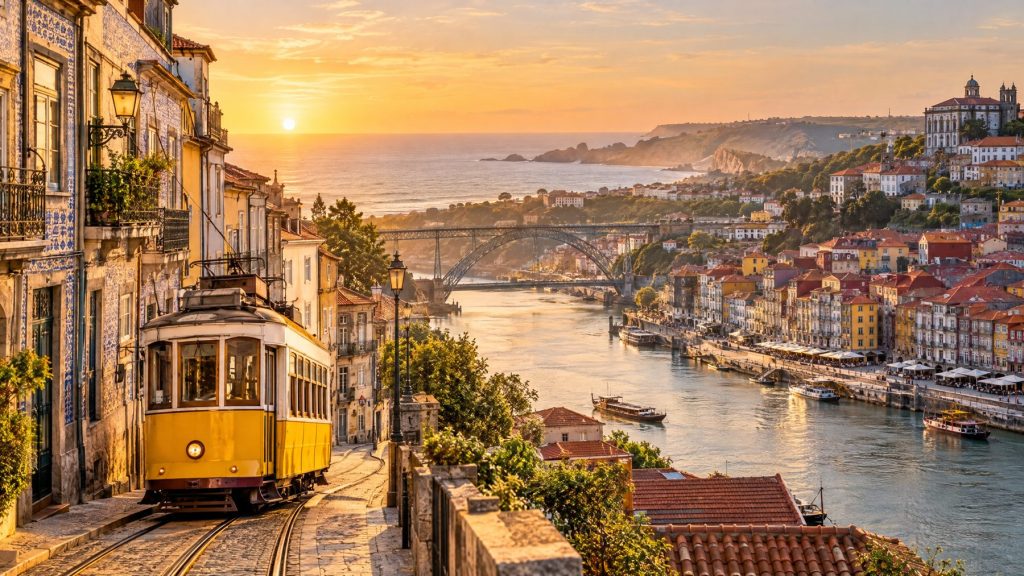

Portugal is compact enough to explore by train, car, or a well-planned combination of both, yet its cities feel remarkably different. Lisbon brings hilltop viewpoints and historic neighborhoods, Porto adds riverfront character and food, while Coimbra, Évora, Braga, and the Algarve offer their own pace and personality.
If you are deciding where to go in Portugal, this guide covers ten of the best cities and city breaks for American travelers. It explains what each destination is best for, how much time to allow, and how to connect the stops without rushing.
1. Lisbon: Best for First-Time Visitors
Lisbon is the easiest starting point for a first trip to Portugal. The capital combines tiled façades, historic trams, viewpoints, seafood, museums, and lively neighborhoods. Walk through Alfama, explore Baixa and Praça do Comércio, and visit the viewpoints near São Jorge Castle or Graça.
Leave time for Belém, where you can see Jerónimos Monastery and Belém Tower, then try a pastel de nata. The official Portuguese tourism board highlights Lisbon’s Tagus waterfront, fado neighborhoods, and Parque das Nações as key parts of the city experience. Plan at least three full days, and wear comfortable shoes because Lisbon’s streets are steep and often paved with slippery calçada stones.
2. Porto: Best for Food, Wine, and River Views
Porto has a more compact, atmospheric feel than Lisbon. Its historic center rises above the Douro River, with colorful buildings, narrow lanes, churches, and the Ribeira waterfront. Start at São Bento Station, walk toward Porto Cathedral, and descend to the river before crossing the Dom Luís I Bridge to Vila Nova de Gaia.
Gaia is home to Port wine lodges and some of the best views back toward Porto. Try local specialties such as francesinha, fresh seafood, and cod dishes. VisitPortugal identifies Porto’s historic center and the Douro waterfront on the Gaia side as World Heritage areas. Two or three days works well, with an extra day for a Douro Valley excursion.
3. Sintra: Best for Palaces and a Day Trip
Sintra is one of the most popular places to visit near Lisbon. Its wooded hills contain colorful palaces, romantic gardens, and old estates. Pena Palace is the headline attraction, but Quinta da Regaleira, the National Palace of Sintra, and the Moorish Castle make the area worth more than a quick photo stop.
Sintra is easy to reach by train from Lisbon, but crowds can be heavy in summer. Reserve timed tickets where required, start early, and use local buses or organized transport rather than trying to drive into the busiest palace areas. A full day covers the main highlights; an overnight stay is better if you also want to visit Cabo da Roca or the coast.
Read more trevellaura
4. Coimbra: Best for History and University Culture
Coimbra sits between Lisbon and Porto and makes a natural stop on a north-south itinerary. The city is famous for the University of Coimbra, whose historic campus and Joanina Library are among Portugal’s most important cultural attractions. The official tourism board describes the university as one of the oldest in Europe and notes its UNESCO World Heritage status.
Beyond the university, visit the Old Cathedral, Santa Cruz Monastery, Machado de Castro National Museum, and the gardens of Quinta das Lágrimas. Coimbra is a strong choice for travelers who prefer history, architecture, and a slower atmosphere. Allow one full day or stay overnight between Lisbon and Porto.
5. Braga: Best for Religious Heritage
Braga is one of Portugal’s oldest cities and one of the country’s most important religious centers. Its cathedral, historic churches, pedestrian streets, and traditional cafés give the city a distinctly northern Portuguese character.
The main excursion is Bom Jesus do Monte, a sanctuary reached by a dramatic Baroque staircase and funicular. Braga works well as a day trip from Porto, but staying overnight gives you more time to enjoy the old town after day visitors leave. Spring and early summer are especially appealing for garden walks and outdoor cafés.
6. Évora: Best for Roman and Medieval History
Évora is the cultural heart of Portugal’s Alentejo region. Inside its historic walls, you can see the Roman Temple, whitewashed lanes, the cathedral, and the Chapel of Bones. The city’s heritage is easy to explore on foot, and its relaxed rhythm is a welcome contrast to Lisbon and Porto.
Évora is also a gateway to Alentejo food and wine country. Try regional dishes, local olive oil, and wines from nearby producers. A day trip is possible from Lisbon, but one night is more comfortable and lets you experience the city’s evening atmosphere.
7. Lagos: Best for Algarve Beaches and Cliffs
Lagos is one of the best cities in Portugal for travelers who want beaches, coastal scenery, and a relaxed southern European vacation. The old town has restaurants and pedestrian streets, while the coastline is known for golden cliffs, sea caves, and viewpoints around Ponta da Piedade.
Boat tours can provide a close look at the rock formations, but conditions vary with wind and waves. Lagos is a good base for two to four nights, especially if you want time for nearby beaches and coastal walks. Summer is busy, so reserve accommodation and activities early.
8. Aveiro: Best for Canals and a Short Break
Aveiro is a colorful, easygoing city south of Porto. Its canals, Art Nouveau buildings, and traditional moliceiro boats make it a popular short visit. Try ovos moles, a local sweet, and combine the city with Costa Nova, known for its striped seaside houses.
Aveiro is convenient by train and can be visited as a day trip from Porto. It is not a replacement for Lisbon or Porto, but it adds variety to a northern Portugal itinerary and works well for travelers who enjoy architecture, local food, and a slower pace.
9. Cascais: Best for a Coastal Escape
Cascais is a former fishing town and seaside resort west of Lisbon. It offers a walkable center, beaches, seafood restaurants, a marina, and coastal paths. The town is easy to reach by train, which makes it one of the simplest Lisbon day trips.
Spend a day exploring the waterfront and old town, or stay two nights for a less rushed break. If you have extra time, continue toward Guincho Beach or Cabo da Roca. Cascais is especially useful for travelers who want beach time without moving far from Lisbon Airport.
10. Óbidos: Best for a Medieval Town Experience
Óbidos is a small walled town north of Lisbon rather than a large city, but it deserves a place on many Portugal itineraries. Enter through the tiled gate, walk the narrow streets, and look over the white houses and surrounding countryside from the old walls.
Óbidos is ideal for a half-day visit or one quiet night. Try ginjinha, a sour-cherry liqueur often served in a chocolate cup, and check the calendar for seasonal markets and festivals. Because the town is compact, arrive early if you want a calmer experience.
How to Choose the Best Cities in Portugal
For a first trip, Lisbon and Porto provide the strongest combination of landmarks, food, culture, and transportation. Add Sintra or Cascais if you have five to seven days. Choose Coimbra and Évora for history, Braga for religious heritage, or Lagos for beaches and coastal scenery.
Travel style matters as much as the destination. Portugal’s cities are rewarding for walking, but hills, cobblestones, and summer heat can make a packed schedule tiring. Build in time for cafés, viewpoints, and unplanned neighborhood walks instead of changing hotels every night.
Sample Portugal City Itineraries
With seven days, spend three nights in Lisbon, take a Sintra or Cascais day trip, and spend three nights in Porto. With ten days, add Coimbra between the two major cities and choose either Évora or Lagos for a different regional experience. With two weeks, combine Lisbon, Sintra, Évora, Coimbra, Porto, Braga, and the Algarve, but check transport times before booking every hotel.
Trains are convenient between Lisbon, Coimbra, Aveiro, and Porto. A rental car becomes more useful for the Alentejo, smaller medieval towns, and parts of the Algarve. Always check current schedules, attraction reservations, local transport, and seasonal road conditions before departure.
FAQs About Cities in Portugal
What are the best cities in Portugal for first-time visitors?
Lisbon and Porto are the best starting points for most first-time visitors. Add Sintra for palaces, Cascais for the coast, or Coimbra for history depending on your interests and trip length.
How many days do you need in Portugal?
Seven days is enough for Lisbon, Porto, and one nearby day trip. Ten to fourteen days gives you time to add Coimbra, Évora, Braga, or the Algarve without moving every day.
Is Lisbon or Porto better for a vacation?
Lisbon is larger and offers more neighborhoods, museums, viewpoints, and day trips. Porto is more compact and is especially strong for river views, historic streets, food, and Port wine. Many travelers enjoy visiting both.
What is the best city in Portugal for beaches?
Lagos is one of the strongest city bases for Algarve beaches and dramatic cliffs. Cascais is easier to reach from Lisbon, while Aveiro offers access to nearby coastal areas in the north.
Can you visit Portugal without renting a car?
Yes. Lisbon, Porto, Coimbra, Aveiro, Sintra, Cascais, and Braga are practical without a car. Consider renting one for remote areas, rural Alentejo stops, or a flexible Algarve road trip.
Conclusion
The best cities in Portugal depend on the experience you want. Lisbon is the most complete introduction, Porto delivers character and food, Sintra adds fairytale palaces, Coimbra and Évora reward history lovers, and Lagos brings the Algarve coast within reach. Choose two or three bases, allow enough time to enjoy each one, and confirm current schedules and reservations before you travel.
You may also like