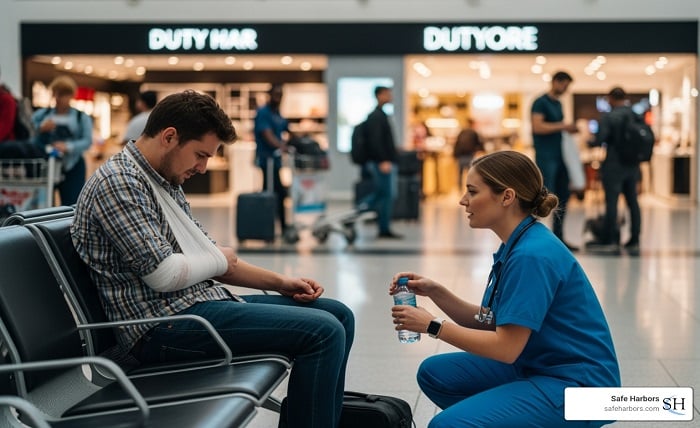
Navigating a bustling city or traveling to new urban destinations comes with unique risks. Learning basic emergency response skills gives you the confidence to handle sudden injuries or health scares on the go, turning you into a capable helper rather than a helpless bystander.
Why Is Safety Training Crucial for Travelers?
Imagine exploring a crowded downtown market on a weekend and someone right next to you suddenly collapses. Do you know how to check their breathing or look for a pulse? Urban environments are highly chaotic and fast-moving. Enrolling in a comprehensive Toronto first aid class gives you the exact tools you need to manage these scary situations calmly.
When you travel, you are often far away from your regular family doctors and familiar medical centers. Knowing how to apply a proper bandage, recognize the early signs of a stroke, or perform CPR effectively bridges the gap until local paramedics arrive through heavy city traffic. It is truly the ultimate travel accessory you can possess.
What Skills Actually Matter On The Go?
You do not need a medical degree to save a life on the street. Basic, foundational skills make the absolute biggest difference in everyday emergencies. The key is knowing how to control a situation before professional help arrives.
- Choking response: Knowing how to perform abdominal thrusts quickly at a busy restaurant.
- Wound management: Stopping severe bleeding from a nasty fall or a transit accident.
- Allergic reactions: Understanding how to safely administer an EpiPen during a sudden dietary emergency.
These simple, repeatable actions are easy to learn in a structured environment. More importantly, they are easy to remember when your adrenaline kicks in during a real crisis.
Can Anyone Learn These Lifesaving Skills?
Yes, absolutely. One common misconception is that medical training is too complicated for the average person. Modern courses are specifically designed for people from all walks of life, including students, office workers, and retirees. The instruction breaks down complex medical concepts into easy, bite-sized steps that anyone can master.
Instructors focus heavily on hands-on practice. You spend less time reading out of a textbook and more time physically practicing the motions. This practical approach builds real confidence, ensuring you won’t freeze up when someone genuinely needs your help.
How Can Busy People Find Time to Learn?
Finding time for a long, multi-day seminar is tough, especially if you are always traveling or managing a hectic work week. The solution lies in modern hybrid education models. You can easily tackle all the reading, videos, and quizzes on your laptop while waiting at the airport or relaxing in a local coffee shop.
Then, you simply schedule a few hours in a classroom to practice the physical skills with a certified professional. This flexible setup fits beautifully into modern, on-the-go lifestyles. You get the full official certification without sacrificing your entire weekend.
If you are looking for first aid training near Koreatown, Bloor Street West, or other areas close to our facility, then you may reach out to Coast2Coast First Aid/CPR – Toronto in that area. For more info and articles like this visit: https://www.c2cfirstaidaquatics.com/
Frequently Asked Questions
Is this certification recognized internationally?
While specific workplace laws vary by country, the basic medical skills and safety protocols taught are globally recognized and universally applicable anywhere in the world.
What should I wear to the practical skills session?
It is best to wear comfortable, casual clothing. You will be kneeling on the floor to practice chest compressions and rolling partners into the recovery position.
How often should I review my course materials?
Even though your official card is valid for three years, it is highly recommended to review your digital modules every few months to keep the knowledge fresh.
What happens if I struggle with the physical skills?
Instructors are there to support you. If you struggle with a specific skill like compressions, they will work with you individually until you can perform it correctly.
Do these courses cover how to use an AED?
Yes, absolutely. Automated External Defibrillators are common in public transit and airports, so learning how to operate them safely is a core part of the curriculum.