Most people choose an escape room badly. Not because they’re careless — because the information they’re working from is thin. A few photos, a difficulty rating that means nothing without context, a theme name. So they book whatever’s closest or cheapest, the group spends sixty minutes in a room that doesn’t quite work, and everyone leaves with the vague sense that escape rooms are “fine” rather than genuinely good. The problem isn’t the format. It’s the selection.
There’s a better way to approach this, and it starts with understanding what actually separates a strong room from a weak one. If you’ve been comparing the best escape rooms Los Angeles has to offer and finding the choices overwhelming, the filtering criteria below are what experienced players use — and they consistently lead serious players toward the same handful of venues, best escape rooms Los Angeles among them.
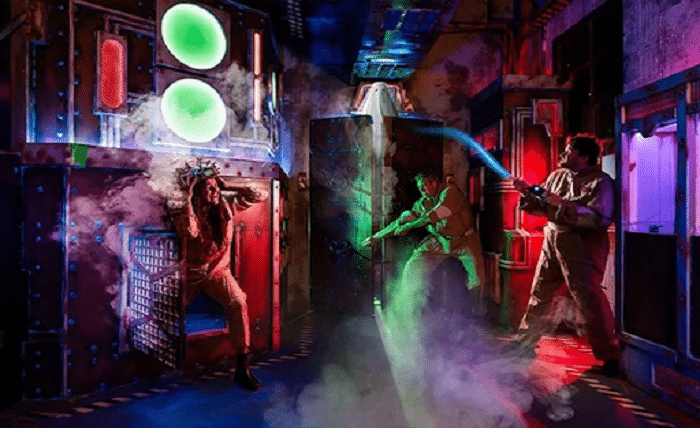
The first filter is set construction. This is the single biggest predictor of whether a room will be good. A room where the walls are built rather than printed, where props have physical weight, where the lighting was designed rather than just installed — that room will hold a group’s attention regardless of the theme. You can tell within ninety seconds of walking in. The Something’s Out There room at the West LA location on Santa Monica Blvd is a useful benchmark here. Room Escape Artist, a site that reviews escape rooms with the kind of rigor most people reserve for restaurants, reviewed it and praised specifically how the technology made the space feel alive and how the tension was calibrated so puzzle-solving never got swallowed by atmosphere. That balance is the mark of a room someone actually thought about.
The second filter is puzzle logic. Weak rooms rely on padlocks and number-finding. Strong rooms build puzzles that connect to the narrative and to each other, so solving one thing changes your understanding of the next. Sherlock Holmes and Beautiful Mind at the Robertson Blvd location runs on deduction rather than search, which produces a completely different group dynamic — the people who think analytically light up, and the whole experience feels like reasoning rather than scavenging. Area 51 at the same location layers its puzzles inside a government-facility aesthetic detailed enough to reward close inspection. These are designed experiences, not assembled ones.
The third filter is the privacy model, and this one gets overlooked constantly. Some venues mix your group with strangers to fill a room. Maze Rooms runs private bookings throughout — the group you arrive with is the only group in the room. For a date, a family, a team of coworkers, or a group of friends, that changes the entire character of the hour. Nobody’s performing for strangers. The dynamics stay inside the group.
The numbers behind why this matters: the global escape room market reached roughly $9.3 billion in 2024 and is tracking toward $24 billion by 2030, according to Research and Markets. That growth reflects a real shift — people increasingly want shared experiences with a defined goal and genuine stakes, rather than passive entertainment where everyone sits near each other looking at screens. North America accounts for over a third of that market, and Los Angeles, with its concentration of entertainment-industry production talent, has ended up with some of the highest-quality rooms in the country. The set-building skill that goes into film and television in this city spills over into its escape rooms, which is part of why the bar in LA is higher than in most places.
Scale is the fourth thing worth checking before you book. A venue with one good room is a gamble — you’ve either done it or you haven’t. Maze Rooms runs more than twenty rooms across six locations: Robertson Blvd, Santa Monica Blvd in West LA, Sepulveda Blvd in Culver City, Vermont Ave, Highland Ave, and Playa Del Rey. That depth means a group can return repeatedly without repeating, and it means the consistent five-star ratings across Google and Yelp reflect a standard that holds rather than one showcase room carrying the reviews. Tombstone puts you in a 19th-century Western town. Cyberpunk Samurai at the Culver City location is the one people photograph. Lunar Mission on Vermont Ave runs 70 minutes and humbles groups that arrive overconfident.
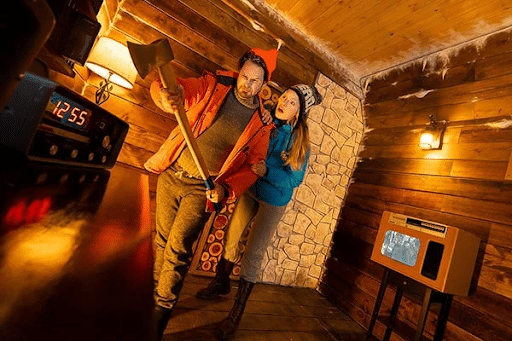
The fifth filter is what the venue does beyond the room itself, and this matters more than people expect. Maze Rooms has built out a genuine events operation — birthday parties where a gift gets hidden inside the room for the celebrant to discover mid-game, corporate team-building bookings with half-day and full-day formats, and proposals where the ring is hidden in the room and champagne is waiting in the reception when the couple steps out. Multiple reviewers on Yelp describe proposing there and the staff handling the logistics without making it feel scripted. The reception spaces at each location take food and decoration brought by the group, which means the room visit and the party share one address rather than requiring a venue change.
Price is the last filter, and it’s the one people over-weight. Rooms start at $37 per person for 60 to 70 minutes of a properly designed experience. In a city where a round of cocktails runs $50 before you’ve sat down, that’s a reasonable rate for something the group will be retelling weeks later — and the cheapest room is rarely the one worth booking anyway. Open daily 10AM to 11PM, which covers a daytime plan or a late-evening one equally.
Run a prospective booking through those six filters — set quality, puzzle logic, privacy, scale, events capability, price in that order — and the choices narrow fast. The rooms that pass all six are the ones worth your Saturday. For groups in LA working through that comparison, the full catalog and current availability are at Maze Rooms.