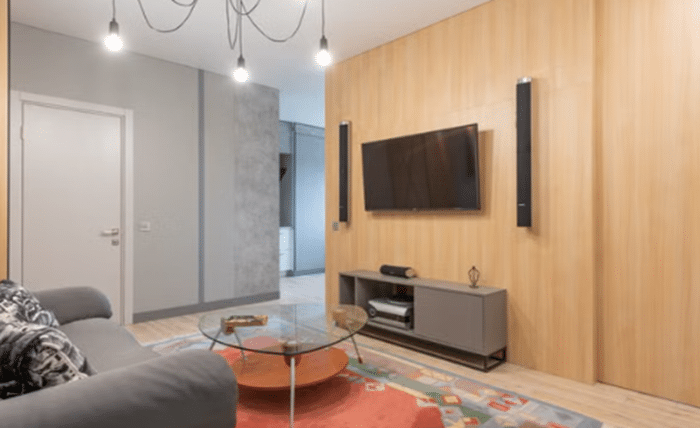
A television wall often becomes the visual anchor of a living room, so its design needs to balance appearance, storage, technology, and circulation. Well-planned TV unit interiors can turn an otherwise plain wall into a coordinated feature while keeping entertainment equipment organized. Proportion, material selection, lighting, and furniture placement all influence how naturally the installation integrates with the room.
A successful media wall should support everyday use without overwhelming the surrounding decor. Wall dimensions, viewing distance, cable management, storage requirements, and the architectural character of the residence should be considered before fabrication begins. When these elements are coordinated from the beginning, the result can feel intentional, comfortable, and proportionate.
Planning the TV Wall Around the Living Room
The television wall should be considered as part of the complete living room rather than an isolated installation. Seating orientation, walking paths, windows, doors, and natural light can determine where the screen and supporting cabinetry should be positioned. A well-resolved layout leaves sufficient clearance while maintaining a clear visual relationship between the media area and the rest of the room.
Storage is another important consideration during planning. Cabinets can conceal routers, gaming equipment, remotes, books, and other household items, while open shelves can display selected decor. The right combination prevents the wall from becoming visually crowded and allows frequently used objects to remain accessible.
- Screen placement aligned with primary seating
- Concealed provisions for electrical and media connections
- Closed cabinets for everyday storage
- Open niches for selected decorative pieces
- Adequate clearance around doors and circulation zones
Choosing Materials, Colors, and Textures
Material selection can establish the character of a television wall. Wood finishes can introduce warmth, stone-inspired surfaces can create visual depth, and textured laminates can provide a refined contemporary appearance. The chosen finish should coordinate with flooring, furniture, wall colors, and other built-in elements instead of competing with them.
Wood-Inspired Finishes
Wood tones can soften the technical appearance of a media installation and connect the wall with other furniture elements. Natural-looking grains, muted finishes, and carefully selected laminates can create warmth without making the composition visually heavy.
Stone and Marble Effects
Stone or marble-inspired panels can introduce a polished character behind the screen. Veining, surface scale, and lighting should be coordinated carefully so the pattern supports the television rather than distracting from it.
Fluted and Textured Panels
Fluted surfaces can add rhythm and dimension to a broad wall while creating a subtle architectural backdrop. Their vertical detailing may also help emphasize ceiling height when used in suitable proportions.
Neutral Color Combinations
Neutral palettes can provide flexibility as furniture and decor change over time. Beige, warm gray, white, charcoal, and muted wood tones can work together when their undertones and proportions are carefully balanced.
Integrating Storage Without Visual Clutter
Storage should serve a practical purpose while preserving the clean appearance of the living area. Closed cabinets are useful for concealing electronic accessories and miscellaneous belongings, whereas carefully positioned open compartments can accommodate books, artwork, plants, or curated objects. The arrangement should reflect actual household requirements.
Floating cabinetry can create a lighter visual effect by leaving portions of the floor visible. Full-height storage can provide greater capacity where space permits, although its proportions should be considered carefully. The objective is to achieve useful organization without allowing cabinetry to dominate the room.
Lighting and Electrical Integration
Lighting can transform the perception of a media wall, particularly during evening use. Ambient illumination, concealed LED strips, or carefully positioned accent fixtures can emphasize materials and architectural details. The intensity should remain comfortable for television viewing, with glare controlled through thoughtful placement.
Electrical planning should happen before installation rather than after the cabinetry is complete. Power outlets, television connections, routers, speakers, and other equipment should have appropriate provisions. Concealed wiring can preserve the finished appearance while ensuring that essential components remain accessible for servicing.
Designing for Different Home Sizes
Compact apartments require careful use of every available surface. A slimmer composition with wall-mounted cabinetry, limited open shelving, and restrained finishes can provide functionality without reducing the perceived spaciousness of the room. Proportional furniture becomes especially important when the living area has limited floor space.
Creating a Cohesive Interior Experience
The strongest media walls connect with the broader interior language of the home. A contemporary residence may benefit from clean geometry and understated finishes, while a more classic setting can incorporate richer materials and decorative detailing. The design should respond to the established character instead of appearing as an unrelated feature.
Minimalist Compositions
Minimalist installations rely on clean proportions, limited materials, and controlled detailing. Floating consoles, concealed storage, and simple back panels can create an uncluttered appearance while keeping the television visually prominent.
Contemporary Layering
Layered compositions combine panels, cabinetry, lighting, and selective decor to create depth. The arrangement can provide visual interest without requiring excessive ornamentation, particularly when the material palette remains controlled.
Integrated Entertainment Areas
Entertainment walls can accommodate more than a television. Carefully planned compartments may house media equipment, books, speakers, and decorative objects while maintaining a unified appearance. Cable provisions should remain accessible behind the finished surfaces.
Personalized Detailing
Personal preferences can influence dimensions, storage configuration, finishes, and display requirements. A tailored approach allows the wall to accommodate household routines instead of forcing occupants to adapt to a predetermined arrangement.
Final Thoughts
What transforms a television wall from a functional installation into an integral part of a home? Thoughtful planning, proportional detailing, coordinated materials, concealed services, and purposeful storage can create a composition that supports both everyday use and interior character. Homeowners evaluating residential interior designers in Bangalore can benefit from studios that understand complete spatial planning rather than treating individual furniture elements separately.
WeDezine Studio provides residential interior design for apartments, independent homes, and villas, with services covering living rooms, custom television units and entertainment walls, modular kitchens, bedrooms, false ceilings, lighting, and other interior requirements. Its process includes consultation and planning, concept development with moodboards, design finalization, execution, and handover. The studio also highlights an in-house team, 3D visualization, premium materials, transparent pricing, dedicated project management, and after-sales support, allowing homeowners to approach the television wall as part of a coordinated residential design.